

EPICA-DIPG: a European consortium to test a new strategy for the most aggressive pediatric brain tumor
EPICA-DIPG is a European research consortium led by the Hospital Sant Joan de Déu Barcelona (HSJD) and the Institut de Recerca Sant Joan de Déu (IRSJD) that will investigate an innovative
An international study finds a link between diet and gastrointestinal symptoms in children with Hirschsprung disease
Diet plays an important role in the daily lives of many children and adolescents with Hirschsprung disease. However, there is still limited scientific evidence on how specific foods may influence the
Empty nose syndrome: when breathing stops being automatic
Breathing is something we do without thinking. An automatic act that accompanies every moment of our lives. But for people living with Empty Nose Syndrome (ENS), breathing can become a conscious
“Suddenly you find yourself in a world you didn’t expect”: an interview with Cristina Villodas about living with arthrogryposis
What is arthrogryposis? Congenital multiple arthrogryposis is a rare neuromuscular disease, but it's not actually a single disease; there are more than 400 types. They all have something in common
Palliative care in rare diseases: providing support beyond diagnosis
People living with a rare disease, along with their families and caregivers, face complex challenges throughout their lives. Many of these diseases are chronic, progressive, or disabling, making it
Undiagnosed patients: living with a rare disease in uncertainty
Each year, Undiagnosed Diseases Day invites us to shed light on a reality that remains little known within the field of rare diseases: that of thousands of people living with symptoms, limitations and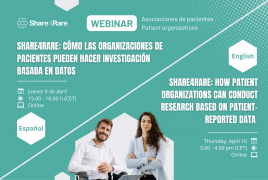
Webinars for patient organizations: how to conduct research based on patient-reported data
A few weeks ago, we opened the period for reception and evaluation of projects based on patient-reported data for 2026. Therefore, at Share4Rare, we have organized a series of webinars aimed at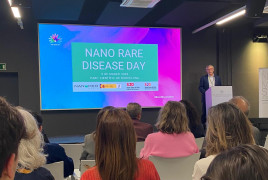
Patient experience as a compass for innovation: the voice of patient organizations at Nano Rare Diseases Day 2026
On March 5th, the Institut de Recerca Sant Joan de Déu (IRSJD) and the Institute for Bioengineering of Catalonia (IBEC) held another edition of Nano Rare Diseases Day, a key event that brings together
Reception and evaluation of research projects for 2026
One of Share4Rare's most important goals is to promote research in rare diseases, driven by patient organizations and academic institutions. Share4Rare currently has a community of over 5,000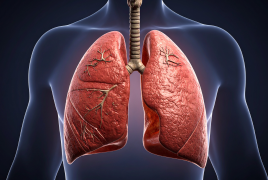
“Breathing Better to Live Better”: A Conversation with Mariano Pastor, President of Alfa-1 España, on Respiratory Physiotherapy, AATD, and the Value of Data
When you lack a protein that protects your lungs and liver, every breath counts. Alpha-1 antitrypsin deficiency (AATD) is a genetic condition that predisposes individuals to liver disease and early
A Share4Rare study analyzes the correlation between brain structure and the severity of Rett syndrome
People affected by Rett syndrome, primarily girls, have a severe disability that affects almost every aspect of life, from speech to the ability to walk, eat, and even breathe. This is often
Neuromuscular diseases: understanding, adapting and building community
What are neuromuscular diseases? Neuromuscular diseases (NMDs) are a group of more than 150 conditions that can affect the nerves that control muscles, the muscles themselves, or the communication