

Patient experience as a compass for innovation: the voice of patient organizations at Nano Rare Diseases Day 2026
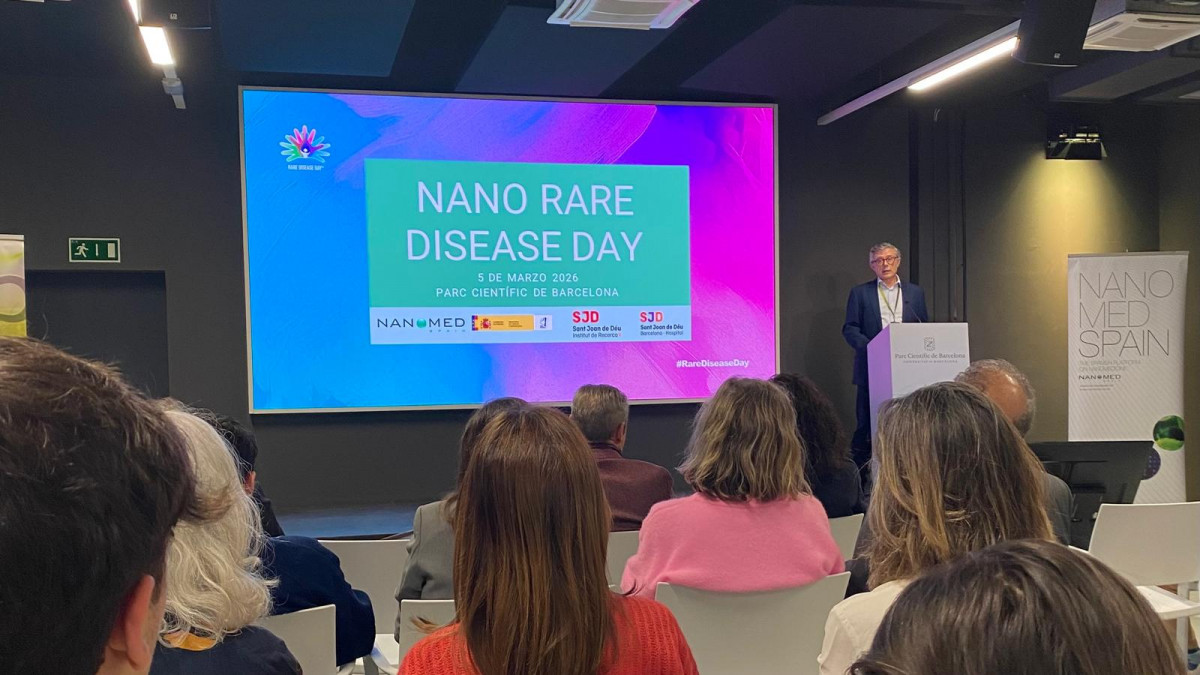
On March 5th, the Institut de Recerca Sant Joan de Déu (IRSJD) and the Institute for Bioengineering of Catalonia (IBEC) held another edition of Nano Rare Diseases Day, a key event that brings together research, innovation, and patients to explore how nanomedicine can transform the diagnosis and treatment of rare diseases.
While the day was marked by high-impact scientific advances, one of the most significant moments was the presentation by Ester Costafreda, representative of the SAMS Association, who offered a profoundly human perspective on the strategic role of patient involvement in biomedical research. She reminded all attendees of something essential: science truly advances when it listens to those who experience the disease firsthand.
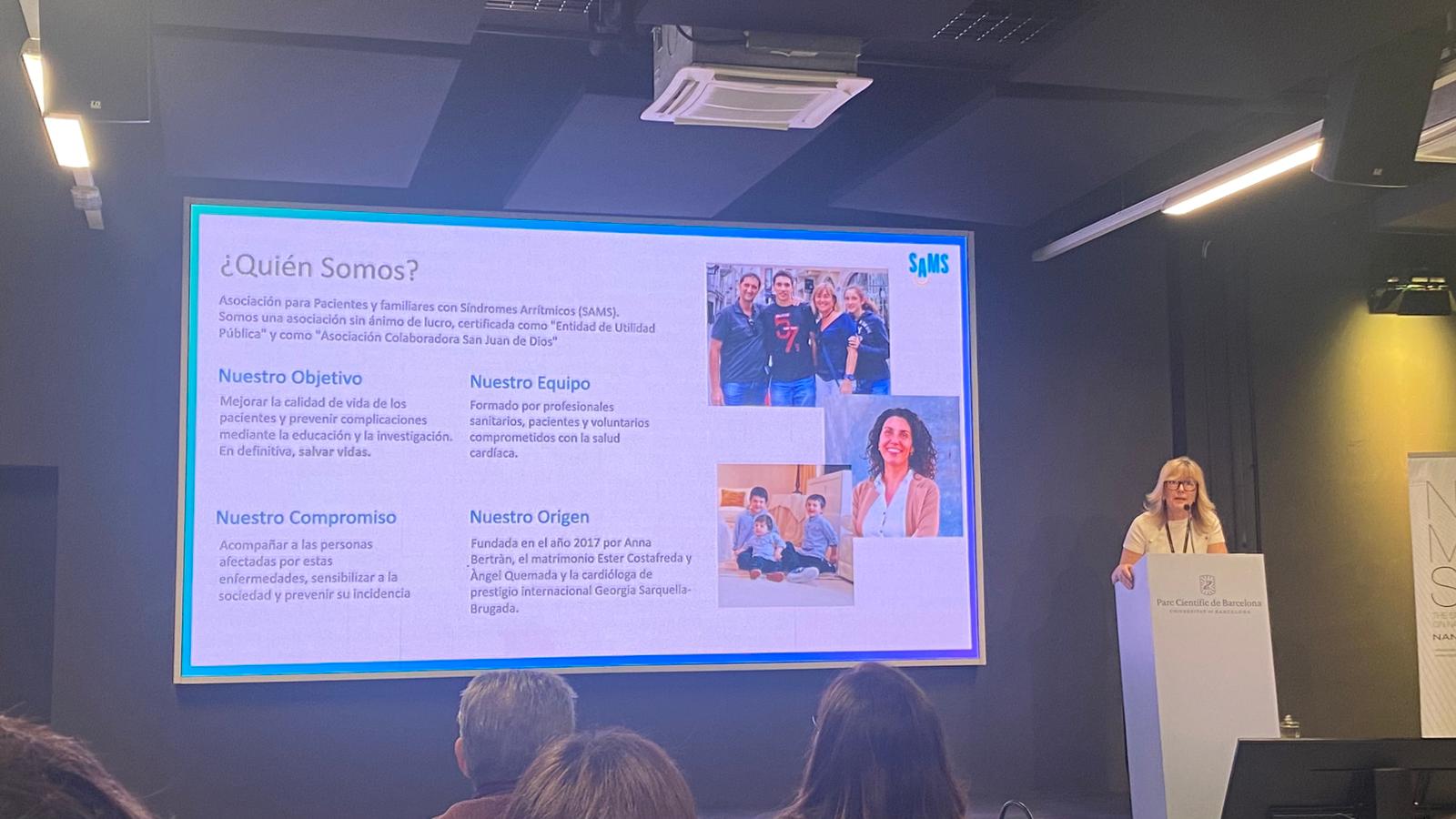
The story that drives SAMS: when personal experience becomes a collective driving force
Ester began her speech by sharing her own story, an experience marked by the sudden loss of her son Ángel in 2014 due to an undiagnosed inherited heart condition. Months later, the autopsy and genetic testing revealed that it was a hereditary, rare disease that also affected other members of her family.
Based on this experience, she and other families spearheaded the creation of SAMS, an organization that supports people affected by cardiomyopathies and channelopathies, and works to prevent new cases through dissemination, psychological support, cardioprotection training, and collaboration with specialized clinical teams.
“When you face these kinds of diseases, you don’t understand anything at all. You need translation, you need support, you need a community,” she explained during her presentation.
The core message: integrate science and experience to maximize impact
Ester clearly articulated why the participation of patients and families is not only valuable, but essential. While the story was powerful, she focused on a strategic message: the patient experience must be at the heart of scientific innovation.
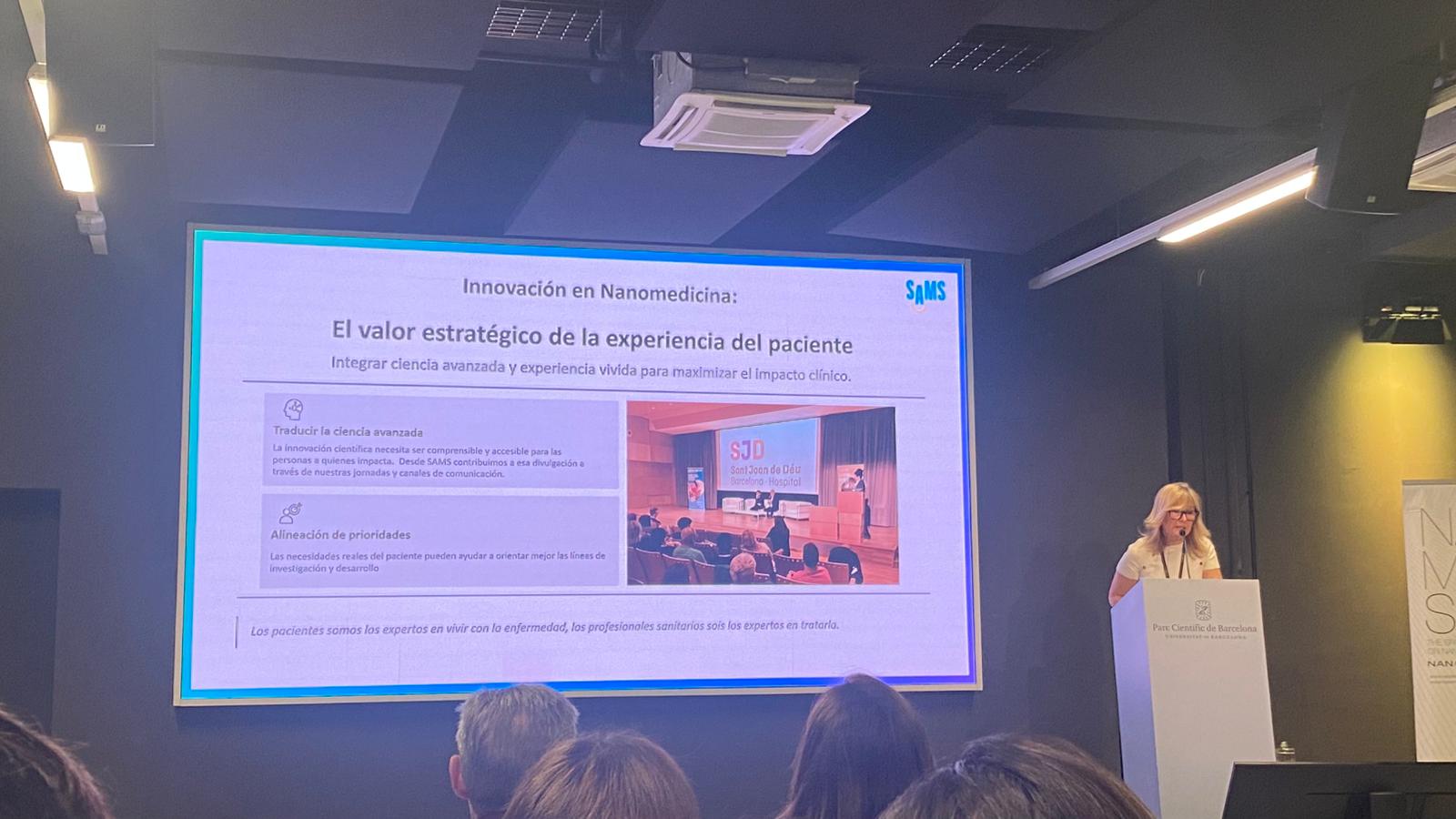
- Translating advanced science. Scientific complexity can alienate those who depend on it most. SAMS acts as a bridge, generating accessible and understandable information for patients and families. “Sometimes it’s difficult to understand what we hear, and associations can help translate science into understandable language,” Ester emphasized. This not only empowers patients but also improves adherence to and participation in research.
- Aligning research priorities. The real needs of patients can better guide which questions the research team should answer and which developments are most urgent. Understanding the impact of daily life changes the way we think about science.
- Co-designing innovation. Ester insisted: “Include us at the heart of the brainstorming process.” The patient experience can help identify barriers and opportunities that are not visible from the laboratory.
- Optimizing clinical trials. Active and direct patient involvement can improve the design, selection, and evaluation of results and the real impact of a therapeutic intervention. It’s not just about data: it’s about clinical and human relevance.
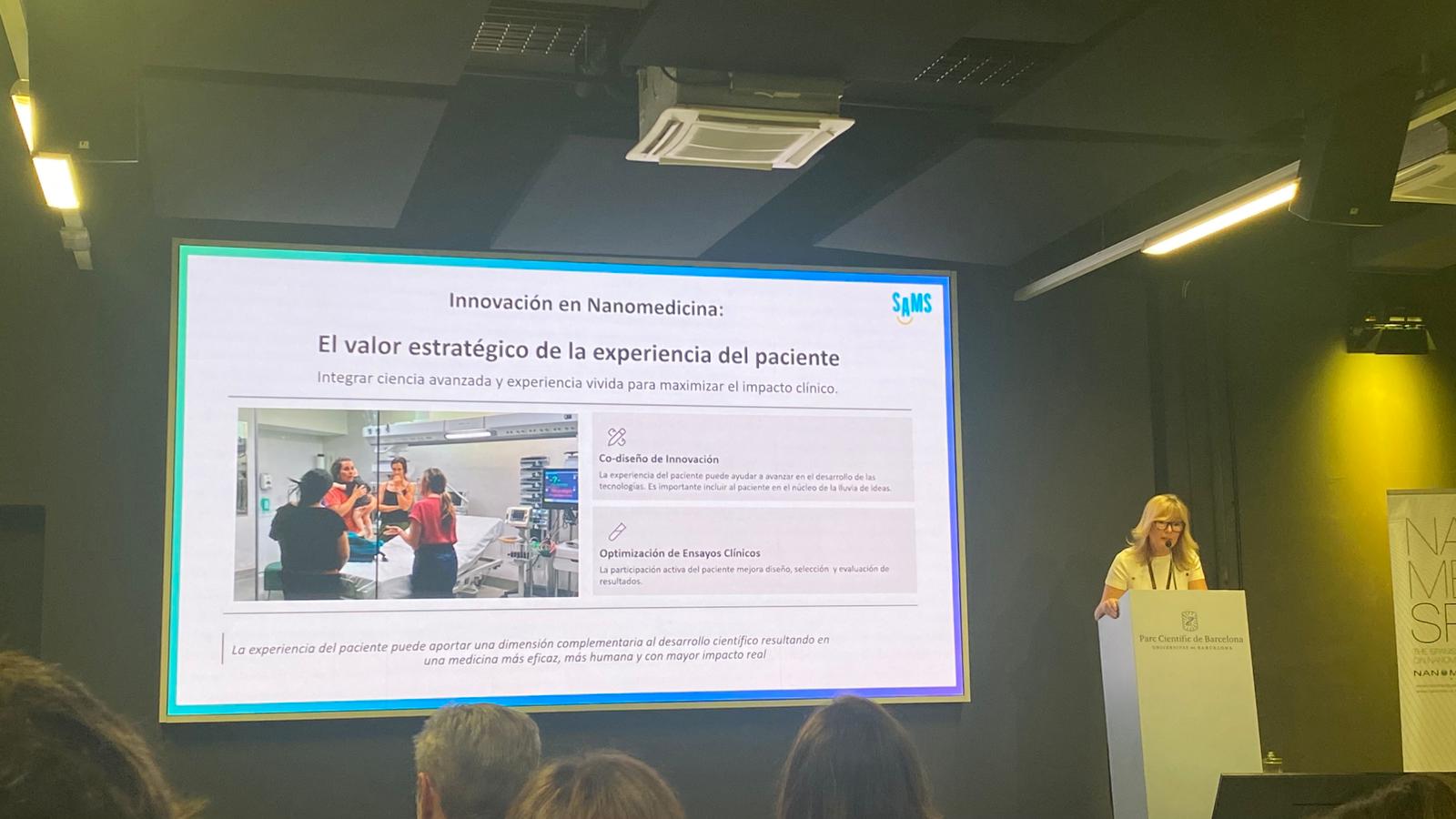
Her closing message summed up the essence of her entire speech: “Patients are the experts in living with the disease; healthcare professionals are the experts in treating it.” Integrating both perspectives transforms research into more effective, more humane medicine with a greater real-world impact.
What science contributed during the day: advances that pave the way
The conference, opened by Joan Comella, director of the IRSJD, and Manuel Salmerón, interim director of the IBEC, included presentations demonstrating how nanomedicine and advanced experimental models are accelerating our understanding of rare diseases. Cecilia Jiménez (IRSJD) moderated the conference, which included the following presentations:
- Nanomedicine as a cross-cutting tool. Josep Samitier (NANOMED Spain) introduced the impact of nanomedicine on developing new diagnostic and therapeutic strategies for rare diseases, emphasizing the importance of collaborations between research, hospitals, and companies to bring these developments to patients.
- Organoids for understanding rare diseases. Elena Garreta (IBEC) presented the use of organoids as experimental models that allow for the study of human diseases with greater precision and reproducibility, essential in rare pathologies.

- Neonatal micropacemakers. Georgia Sarquella (IRSJD) shared advances in micropacemakers for newborns, a technology already successfully implanted at Hospital Sant Joan de Déu that could change the lives of babies with serious heart conditions.
- Gene editing for muscular dystrophies. Anna Lagunas and Marina Inés Giannotti (IBEC) showed new tools for evaluating gene-editing therapies in collagen VI-related muscular dystrophies, bringing therapeutic options closer to those with no treatment.
- Membrane contacts. Lara Cantarero (IRSJD) presented how studying contact sites between cell membranes can provide clues to understanding mechanisms involved in certain rare diseases.
- Liposomal enzyme therapy for Fabry disease. Elisabet González (ICMAB-CSIC) explained the development of an innovative liposome-based therapy to treat Fabry disease, opening the door to more efficient enzyme delivery strategies.
- Targeted metabolomics. Rafael Artuch (IRSJD) showed how metabolomic phenotyping, that is, the measurement of metabolite characteristics, in cell and animal models can help to better understand the mechanisms of rare metabolic diseases.

When science and life engage in dialogue, real solutions are born
The day made clear a necessary evolution: biomedical research is no longer conceivable without the active involvement of patients and their organizations.
Technical advances are essential, but they only truly come to life when connected to the human experience.
Ester Costafreda's speech and the work of SAMS reminded the entire scientific community that the most transformative innovation is that which is designed in collaboration with those living with rare diseases.
Nano Rare Diseases Day proved that the future of rare disease research lies in integrating the technical precision of nanomedicine, the potential of new biomedical tools, and the human perspective of patients and their families.