

Mental health in rare diseases: when caring is as important as treating
When we talk about rare diseases, we often think of complex diagnoses or, in some cases, the lack of it; innovative treatments, or very few treatments; long waits for answers, and a lack of support. But there's something that it is often missed: mental health. How is this journey experienced emotionally? What support is available? Are we doing enough?
Mental health shouldn't be a luxury. It shouldn't be something you do "if there's time." It's a real need for those affected and their families. And in the case of rare diseases, it's the key to improving the quality of life for millions of people.
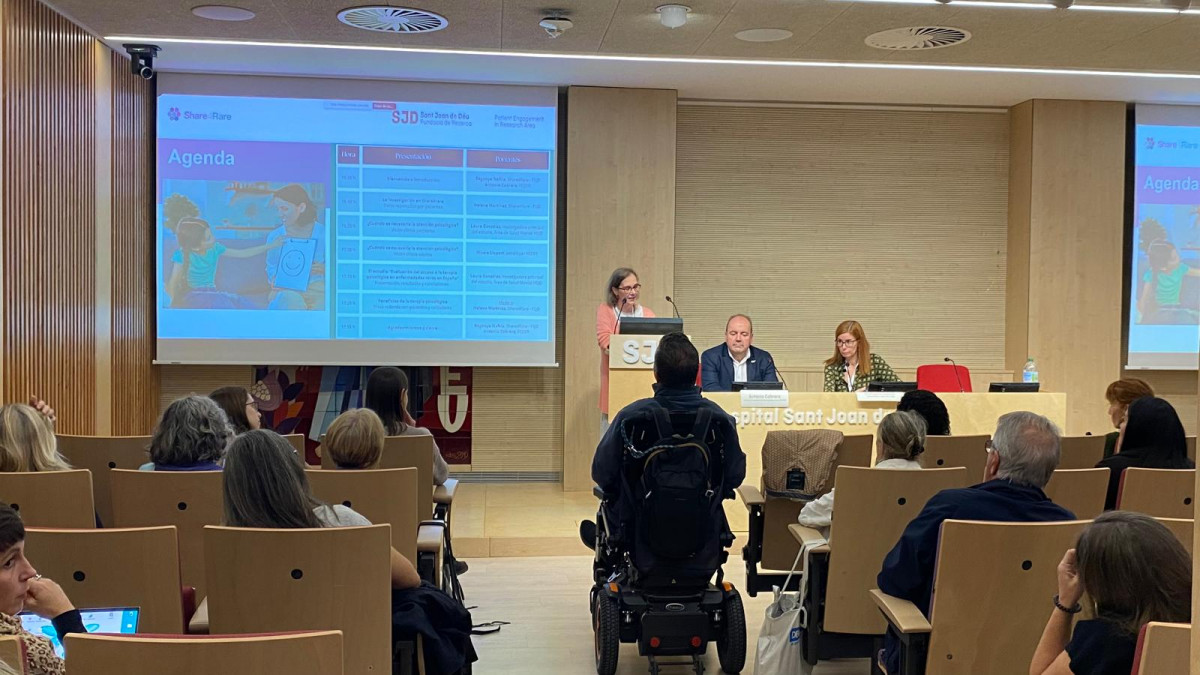
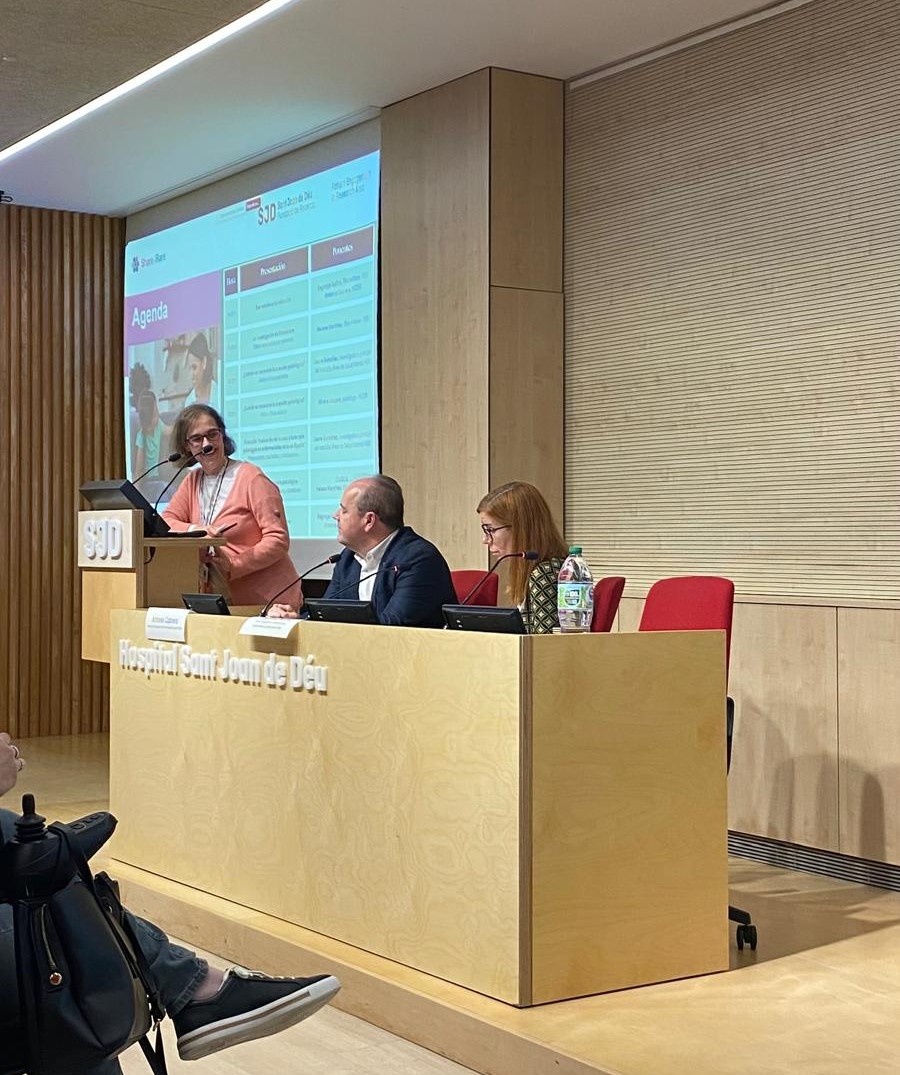
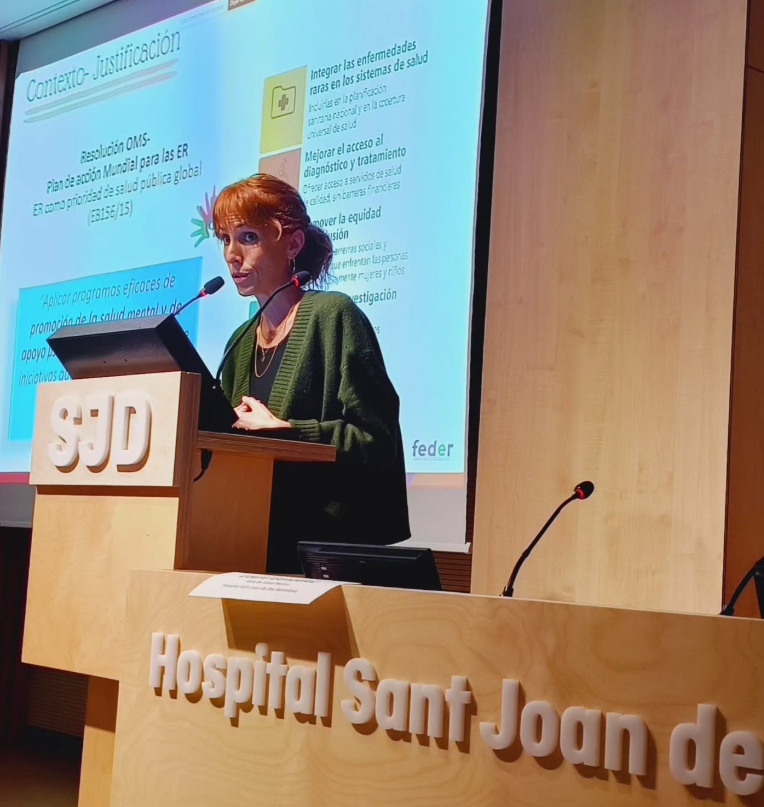
This idea was the core of the Share4Rare Conference: Collaborative Research in Mental Health in Rare Diseases, organized by Share4Rare, in collaboration with Federación Española de Enfermedades Raras (FEDER), which took place on November 5th at the Hospital Sant Joan de Déu Barcelona. The event brought together professionals, patient organizations, and families to reflect on the emotional impact of rare diseases and how to move towards more humane and comprehensive care.
More than numbers, stories
Rare diseases affect 3 million people in Spain and, in most cases, manifest in childhood. This means that behind every diagnosis there is a family that reorganizes its life, faces uncertainty, and seeks answers in a system that is not always prepared.
As Antonio Cabrera, representative of FEDER, said: “Mental health is essential. What good is treating if we can’t provide support? Most diseases are incurable, so the least we can do is provide the best possible care.”
That care, however, doesn't always arrive. And in most cases, it's not because patients and their families don't need psychological help, but because no one offers it to them.
Laura González, a clinical psychologist at Hospital Sant Joan de Déu Barcelona, is clear on this: “Mental health continues to be the forgotten element in the management of rare diseases. And that has to change.”
The invisible burden of the diagnosis
Before they even have a name for the disease, many families experience a true “diagnostic odyssey”, as Laura described it, which can last an average of 5-6 years. “Between tests, surgeries, and waiting, families live with fear, anxiety, and despair. And when the diagnosis finally arrives, another uncertainty arises: what will happen now?” Laura added.
This process leaves a deep emotional mark. And this emotional impact is not confined to the patient.
When a child gets sick, the whole family gets sick
Rare diseases don't just affect the patient. They impact the mother, father, siblings, family economy, social environment, and daily life. Emotional well-being is a matter for the whole family.
Ariadna Cornella, daughter of a person with a rare disease, expressed it with honesty: “I thought therapy was for my mother, until I understood that I needed help too. Caring for others means caring for yourself.”
When help doesn't arrive
The testimonies shared during the event were clear and moving. Beatriz García, a scleroderma patient, explained it bluntly: “I was never offered psychological support in the public healthcare system. I had to find it on my own, at enormous financial cost. And when your life is already full of fear and uncertainty, that just makes it worse.”
Ester Vives, caregiver for her son who has achondroplasia, recounted the moment of his diagnosis: “They told me the diagnosis point-blank during an ultrasound. I left crying, not knowing what it was. No one offered me psychological help. Today, my son asks when he has an appointment with the psychologist, not the orthopaedist. She’s the only one he cares about.”
Testimonies that speak of hope
During the event, mothers, daughters, and patients shared difficult experiences:
- Unsupported grief.
- Feelings of loneliness.
- Lack of psychological support at the beginning.
- Difficulty finding sustained help.
- Social misunderstanding.
These experiences underline the urgent need to integrate mental health into the approach to rare diseases.
But there was also room for hope: patient organizations change lives.
Patient organizations: a light when the system fails
Faced with a lack of public resources, patient organizations are filling a crucial gap:
- Emotional support.
- Workshops and support groups.
- Clear information.
- Connecting families.
- Right's advocacy.
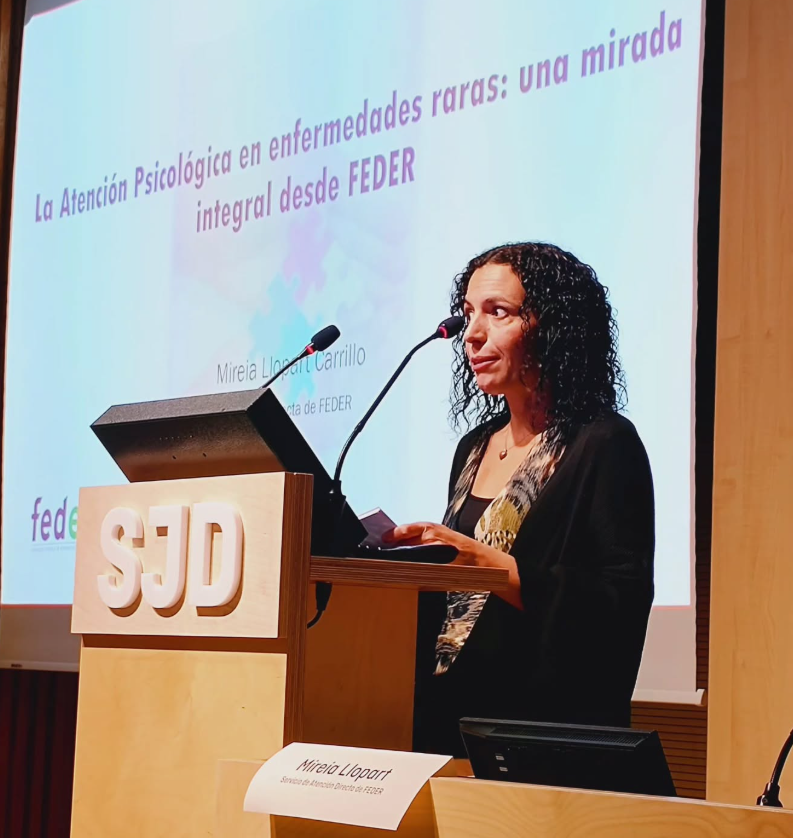
Mireia Llopart, a psychologist in FEDER, summed it up plainly: “When we walk together—individuals, families, professionals, and institutions—that’s when we can create a more comprehensive and approachable care.”
What do we need to change?
The conference concluded with a clear message: mental health must cease to be the forgotten element and must be integrated into the healthcare system. It cannot depend on luck or the financial means of each family. To achieve it, concrete actions were proposed:
- Incorporate clinical psychologists into the public healthcare network and into multidisciplinary teams.
- Facilitate dynamic referral pathways.
- Guarantee territorial equity.
- Recognize and support the role of patient organizations, which currently fill the gaps in the system.
As Begonya Nafria, coordinator of Share4Rare, reminded us: “When we cannot treat, care is essential. And care also means addressing mental health.”
A participatory closure
At the end of the meeting, we asked participants to help us answer two questions on the Research Wall. Below, we share the main ideas that emerged from the answers.
1. What barriers have you encountered in accessing psychological support?
- Economic cost and lack of public coverage.
- Lack of referral/prescription by healthcare professionals.
- Waiting lists and poor continuity of care (spaced-out visits, limited duration).
- Accessibility problems: language, culture, need for an interpreter, discrimination.
- Shortage of professionals specializing in rare diseases and poorly adapted approaches.
- Lack of information on resources and organizations.
- Denial of family support in some cases.
2. What topics do you think would be useful to share in order to improve psychological care?
- Specialized training in rare diseases for psychologists and physicians.
- Clear protocols and dynamic referral pathways (including coverage within the public healthcare system).
- Support for caregivers and families, with tools to manage the emotional burden.
- Recognition and management of emotions, normalizing their expression.
- Empathetic communication of the diagnosis.
- Continuity of care with the same professional to build trust.
- Less psychiatry, more psychology (avoiding overmedicalization).
- Attention to grief, death, and spiritual support.
- Transition from paediatric to adult mental health services.
- Combating stigma and raising awareness of the need for psychological support.
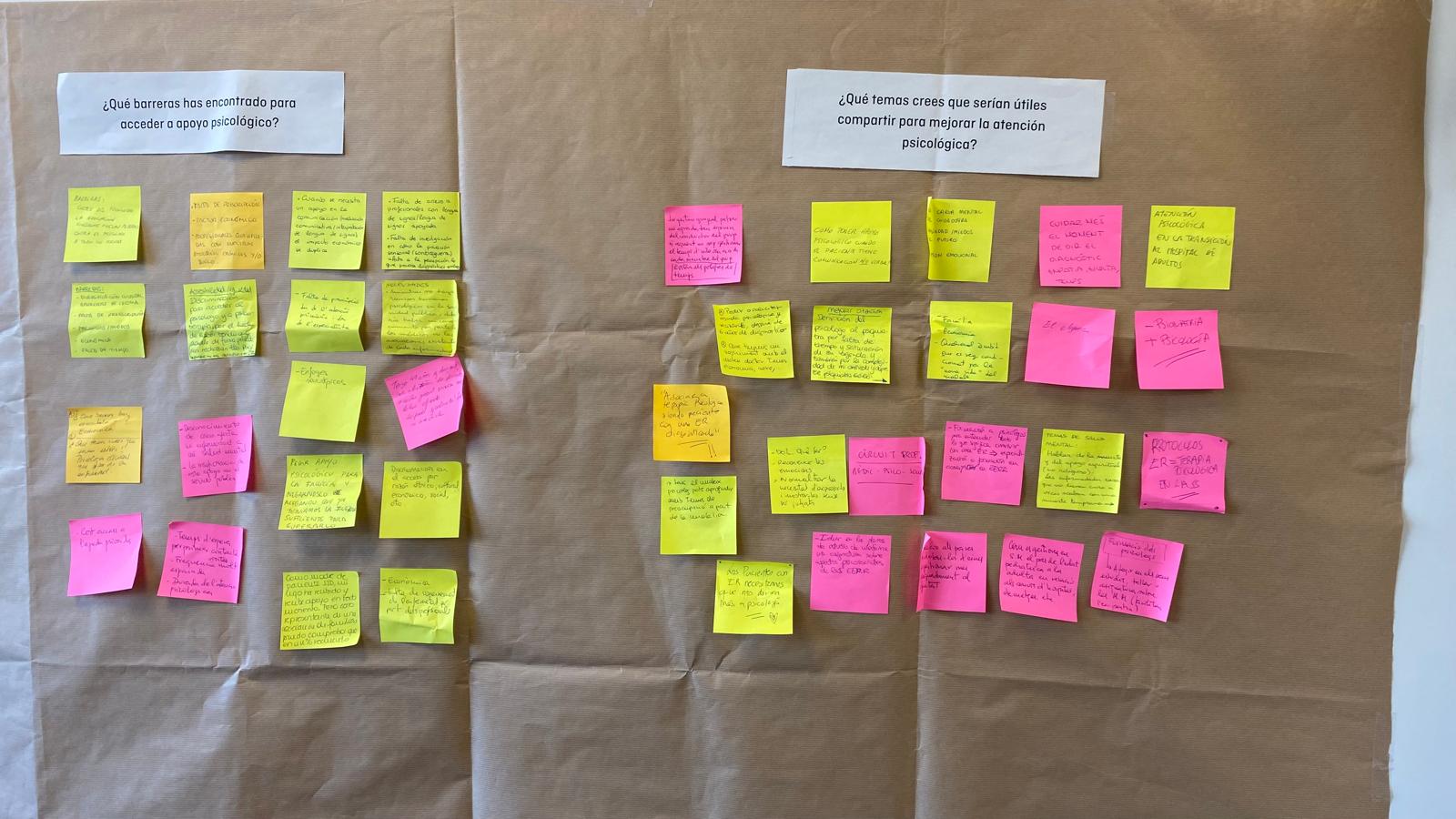
In summary, the barriers are primarily economic and structural: lack of coverage, insufficient referrals, long waiting times, and a shortage of professionals with specific training in rare diseases. Adding to these, accessibility issues (language barriers, interpreters) and a lack of clear information for families.
Regarding improvements, participants call for more specialized, integrated, and humane psychological care: training in rare diseases, clear protocols, support for families, spaces for managing emotions, and support during critical moments (diagnosis, grieving, transition to adulthood). It is also requested a reduction in overmedicalization and a guaranteed continuity of care.
These contributions reflect a reality: change depends not only on professionals and institutions but also on listening to those who live this experience every day.
Because caring is also about transforming
The World Health Organization's (WHO) recent resolution from 2025 marks a milestone by declaring rare diseases a global priority, including the promotion of mental health and psychosocial support. Now it's time to move from words to action.
If you were unable to attend the Share4Rare event on mental health in rare diseases, or if you'd like to relive it, the recording is available on our YouTube channel (in Spanish).