
“Suddenly you find yourself in a world you didn’t expect”: an interview with Cristina Villodas about living with arthrogryposis
What is arthrogryposis?
Congenital multiple arthrogryposis is a rare neuromuscular disease, but it's not actually a single disease; there are more than 400 types. They all have something in common: children are born with several stiff joints, contractures, or even malformations, which leads to limitations in movement. It is estimated to have a prevalence of approximately one in every 3,000 births.
It usually affects both upper and lower joints, arms and legs, but it can also affect the spine, rib cage, or trachea, which, for example, can affect breathing or swallowing.
Are all cases the same?
No, not at all. Although the common factor is contractures, each person experiences them differently, depending on where these contractures or stiffness are located.
As for the types, there's amyoplasia, which is the most well-known, distal arthrogryposis, and others associated with other syndromes or neuromuscular diseases.
That's why it's so important to study each case individually, because arthrogryposis is very broad and affects each person differently, although they all share the common feature of stiff joints. And these contractures aren't like those someone might experience when they suddenly pull a muscle in their neck, for example, and a visit to the physiotherapist resolves it. In arthrogryposis, these are contractures present from birth, they are chronic, and you can't heal them. They can improve with physiotherapy, but they won't be cured.
How is it diagnosed?
In some cases, arthrogryposis is detected during pregnancy. Typical signs include reduced fetal movement or clubfeet (feet turned inward and downward) in newborns. These are warning signs. Decreased fetal movement can prevent joint exercise, hold up the development of mobility, and lead to contractures.
But this isn't always the case, and sometimes the pregnancy seems normal, and the diagnosis arrives at birth when they observe the malformations caused by contractures and joint stiffness.
When these symptoms are present, it's important to carry out a clinical evaluation to determine the specific impairments, whether they are purely motor-related or more complex. It is also necessary to do a comprehensive genetic study to identify any other associated factors, as there may be genetic, neuromuscular, or connective tissue causes.
Is there a treatment?
There's no cure, but there is treatment, and the key is to start as early as possible, practically from birth. The basis is physiotherapy, which is common to all cases. In addition, you can work with occupational therapy, splints, orthotics, speech therapy, and other therapies.
But the basic approach is to start with physiotherapy, and if physiotherapy isn't successful, surgery is considered, as long as it's more beneficial and will significantly improve their quality of life.
It's essential that children begin physiotherapy from a very young age to improve their autonomy and independence and help them achieve their full potential. But then it's crucial to maintain the treatment, because if you don't practice and work on it, you lose it. Physiotherapy is for life. And it shouldn't be seen as just a physical aspect; it's what allows them to participate in daily activities: getting around, playing, or working.
What impact does it have on daily life?
It depends a lot on the severity of the condition. Some people can walk, while others use a wheelchair; some are independent, while others need help eating, dressing, combing their hair, or writing.
It also involves many medical appointments with different specialists: physical therapists, rehabilitation specialists, neurologists, orthopedists, pulmonologists, endocrinologists, nutritionists… In the end, for a child with arthrogryposis to be as independent as possible, it requires a great deal of constant effort from the family.
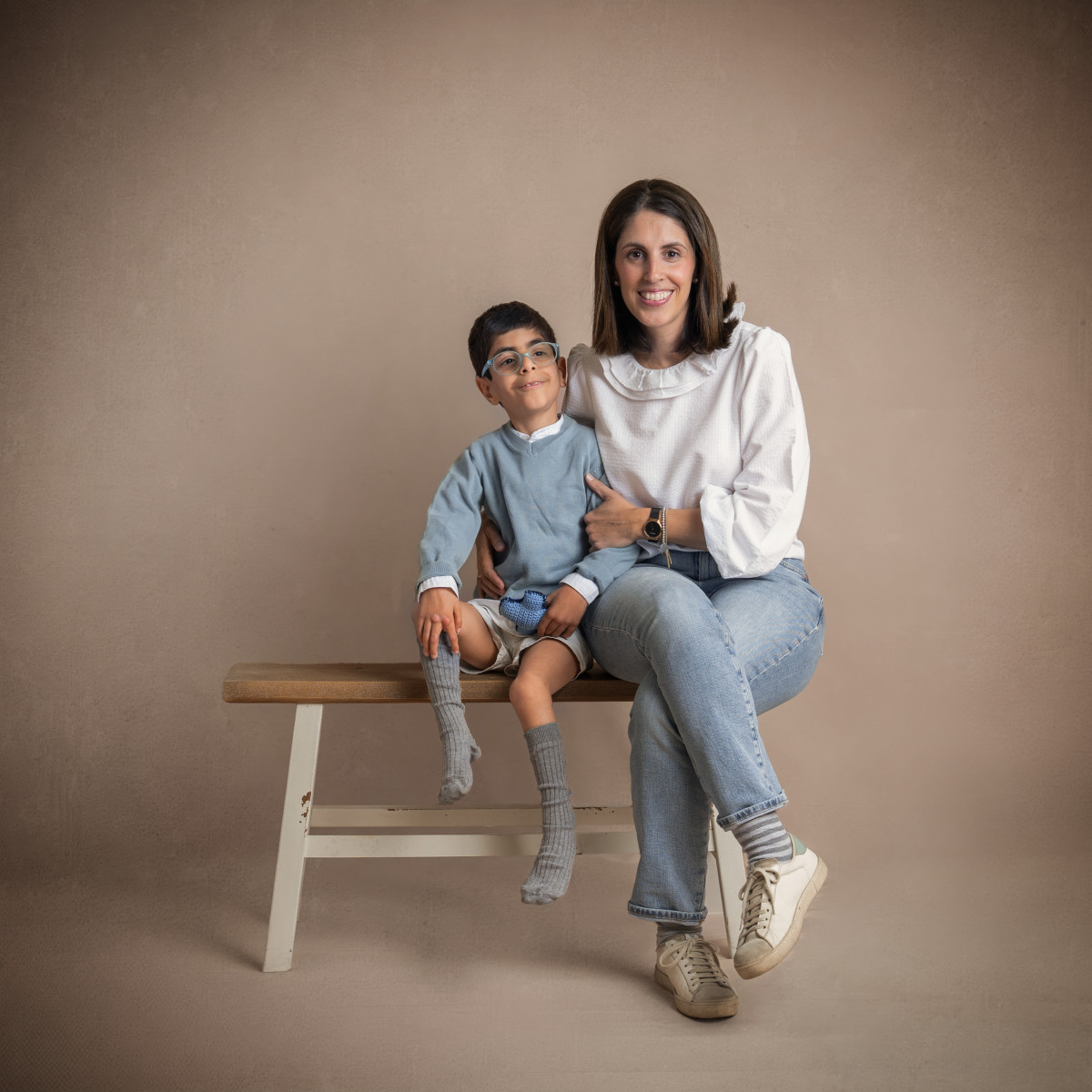
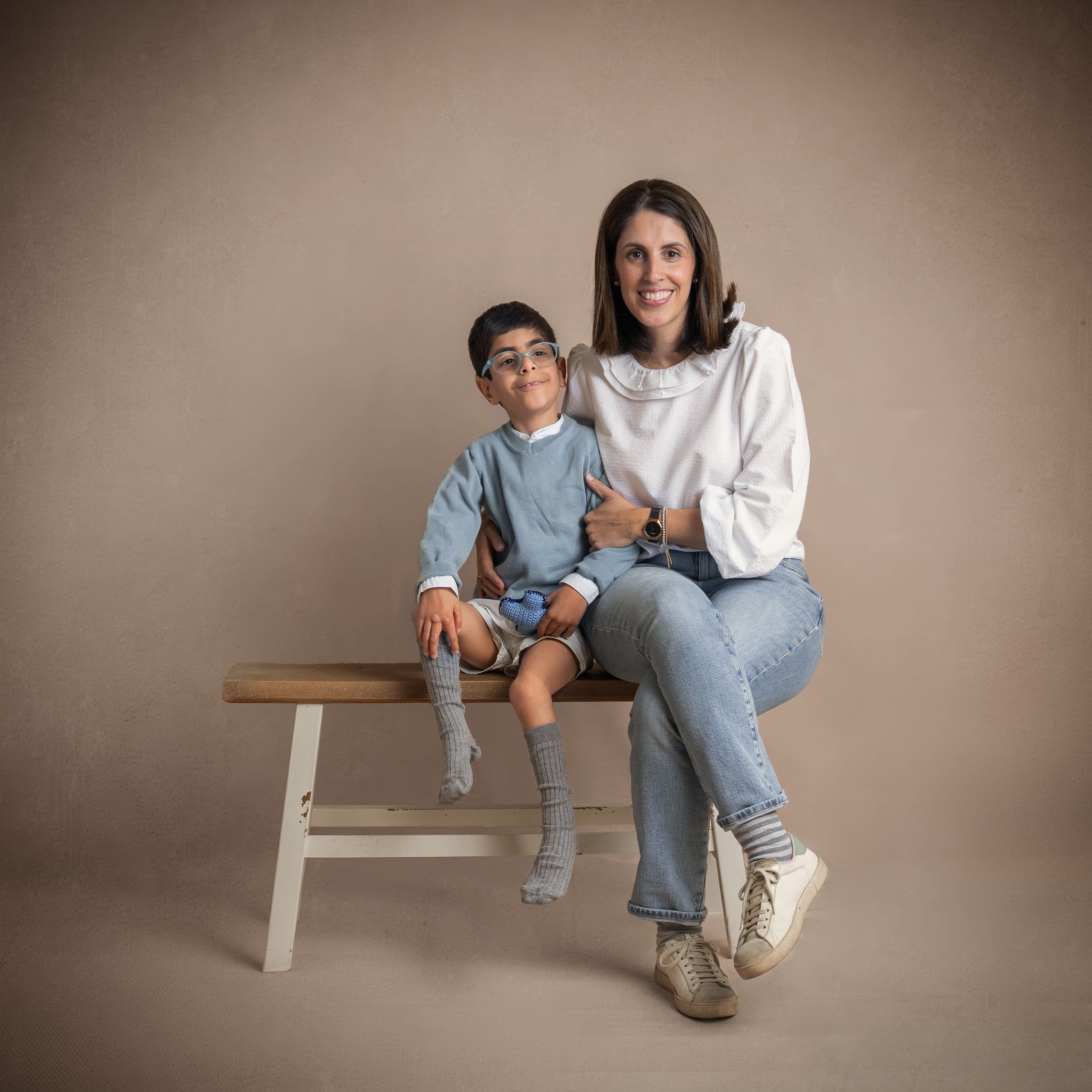
Your 9-year-old son, Iago, has been diagnosed with arthrogryposis. What was your personal experience like with this whole process?
I'm a mother of four, and the third, Iago, has arthrogryposis. When I was pregnant with Iago, I had two very young children, ages one and two, and of course, between that, work, and everything else, I went to my checkups and everything was fine. Looking back, I did think he was a quiet baby because he wasn't very active, but I never mentioned it, and nothing was noticed during the checkups.
At 30 weeks, they realized he had stopped growing, and they hadn't detected it. He was about half the weight he should have been at that point, around 700 grams. So they sent me to the emergency room, and I had a C-section.
So Iago was born into a somewhat complex situation, and from the very beginning, we knew something was wrong, although we didn't know what. He was hospitalized for nine months, and from the start, they told us his joints were a bit stiff, but the diagnosis was gradually confirmed. It was never a single conversation, but something you gradually understand over time. Finally, after about a year, they confirmed he had distal arthrogryposis.
Iago is rigid from head to toe. His hands are stiff, but he can move them somewhat, although not with full range of motion. His legs, however, are more severely affected.
At first, because he couldn't straighten his knees and had clubfeet, they started him on casts when he was very little and were able to correct some of it, although they couldn't correct his equinus, and he continued walking on his toes.
He needed a lot of physical therapy and speech therapy because he couldn't tolerate eating. In fact, he has a G-tube button because he's at risk of malnutrition. He's had some minor surgeries and recently, a more extensive one on his legs to try to align and properly position his feet. We're in the rehabilitation process because he still hasn't started walking again.
And Iago also has cognitive impairment, so he attends a special education school.
How does your family life change?
It changes completely. Suddenly you find yourself in a world you didn't expect: dealing with disability paperwork when he's a baby, dependency applications, searching for the best physical therapists...
In my case, due to a family decision, I opted for the CUME (Spanish disability benefits program), and that gave me some peace of mind because, although I had to completely leave my professional career, which has its negative effects, you more or less continue contributing to social security and can dedicate yourself to your son.
It also has a big impact on the family because when Iago was born, we had two young children and we had to rely on our family network—our parents, my sister, my sister-in-law... You need help to care for the other children and, at the same time, give Iago the best possible development.
And it also affects you emotionally. Not only us, the parents, but also him, his siblings, who have lived with the disability since they were little.
What role did the Spanish Congenital Multiple Arthrogryposis Association play, especially in the beginning?
It was important. At first, it was a warm welcome, a way of reaching out. And then they start putting you in touch with other families. And the organization becomes your go-to resource, helping you with paperwork, if you need technical reports, the assistance you can access, and the types of doctors.
At first, it's emotional support, someone who reaches out, listens, and offers kindness. But then it becomes much more: they guide you, keep you informed, connect you with other families, and help you understand everything you need to do.
It also helps children socialize with other children who aren't the same, but who are from families in the same situation, with the same concerns.
Patient organizations are essential because they get to where the public administration often doesn't, perhaps because it lacks the resources to get to patients so directly.
And since 2020 you've been the president of the organization, how did that happen?
Well, the organization was founded in December 2014 thanks to Toñi, a social worker affected by arthrogryposis. She had the idea and the drive to create the organization with two or three families. She wanted to gather resources, to be a beacon for people with arthrogryposis. She led the organization for six years, and I joined as a board member. And in 2020, when Toñi stepped down as president, I decided to take her place because I felt it was important to continue all the work that was being done.
And what do you offer at the organization?
We have several services. A very important one is information and guidance, provided by a social worker who helps families with all kinds of procedures and resources.
We also carry out many awareness initiatives to educate people about the disease, such as this comprehensive guide on arthrogryposis (in Spanish) that we presented last year in collaboration with the Madrid Regional Ministry of Health. We also organize fundraising activities to finance therapies, orthotics, psychological support, and second medical opinions.
Now we are also encouraging people to participate in adapted sports because, in addition to the sport itself, it has social and psychological benefits.
And then there's the research aspect. We are working with Sant Joan de Déu Hospital in Barcelona to create the first clinical registry of patients (in Spanish), which will be the foundation for a future research project.
Also, we try to provide support throughout the entire process and build community, which is essential.
One of these awareness initiatives is the campaign you've prepared for June 30th, World Arthrogryposis Day. Could you tell us a little about it?
This year we wanted to create an awareness campaign (in Spanish) that plays on the very name of the disease, because often when you say "arthrogryposis" to people, they respond, "arthro... what?"
So the campaign uses that touch of humor to introduce the word "arthrogryposis" and, from there, raise awareness of the condition so it's not invisible. Saying "arthrogryposis" is a strange word, but there are many people who need to be heard. And we're going to link it with real-life stories of people living with arthrogryposis and everything they are capable of doing. Things they do differently in their daily lives, but which allow them to do activities you wouldn't imagine they could do. It could be something as simple as an everyday activity, or it could be climbing Mount Teide.
The idea, above all, is to raise awareness, to educate, and to do so with a touch of humor.

What challenges do you think currently exist related to arthrogryposis?
I'm quite sure about this. There are several challenges. First, improving diagnosis and healthcare coordination, ensuring a multidisciplinary team that works together.
Second, guaranteeing therapies throughout the patient's life, from birth to the end of their days, because it's fundamental. Receiving these resources shouldn't depend on your age, where you live, your postal code, or your autonomous community.
And then, advancing research. Obviously, we need data, registries, clinical knowledge, and more professionals familiar with arthrogryposis.
And, regarding the social aspect: more inclusion. That there are no barriers in schools, leisure activities, or sports, and that everyone can participate in their own way.
Finally, what message would you give to a family that has just received the diagnosis?
To give themslef time to accept it, because it's something you don't expect, but let them know that they are not alone. The organization is there to support, guide, and help them.
It's not easy, but with the right resources, you can get through it. And, despite the difficulty and adversity, I believe it's possible to be happy.
Our sincerest thanks to Cristina for sharing her story with us and dedicating her time. Her testimony helps to raise awareness about arthrogryposis and the reality faced by many families.